
A bound reference can look finished while still being difficult to use. You may remember writing a useful example but lose time finding it, or reach the right page and discover that its instructions only make sense beside the original question.
For VCE General Maths revision this October, give your reference a short usability test before adding more pages. The aim is to find out whether it helps you make the next decision when a question feels unfamiliar.
Check the physical book first
VCAA’s 2026 authorised materials rules permit one annotated bound reference in each General Mathematics examination. It must be A4 or smaller when closed, with pages permanently secured to one horizontal or vertical spine. Any number of pages is permitted. Cloth, glue, staple, spiral and comb binding are allowed when secure and not designed for removing pages.
A written index, colour-coded pages and dividers in your own notes are permitted. Additional material must be firmly attached. Do not use ring binders, removable tabs, Post-it notes, removable sheets in plastic sleeves or fold-outs. Folding a page is permitted; adding a fold-out is not. Ask your teacher to check any uncertain construction before exam day, particularly additions made late in revision.
Run three lookups during actual practice
Choose a short set of questions from the current-study-design section of the VCAA General Mathematics examination resources. That page also provides specifications, sample papers, assessment guides and reports. Use questions you have not just memorised. Put away the solutions and work with your reference and usual calculator.
When you need help, record what you tried to find, where you looked first and whether the entry let you continue. Time the search if useful, but treat the result as a comparison with your own next attempt, not a universal speed target.
1. Find a definition you can apply
Try a question involving a residual. Locate the meaning and sign convention, then return to the question and explain what the value says about that observation. Finding the word alone does not finish the test. The entry should help you distinguish the observed value from the predicted value without hunting through several examples.
If the definition is correct but you searched under prediction error, add that cue to your index. You do not need to rewrite the whole statistics section.
2. Find a worked pattern that supports a decision
Use a financial-modelling question involving a balance, interest and regular repayments. Locate a relevant worked pattern, then identify which quantities and timing assumptions match your question. Before following the steps, explain why that pattern fits.
A page of calculations can be hard to transfer if it never says what the starting balance represents or when a repayment occurs. Add the missing label beside the existing example. If you cannot explain the sequence, take the question to your teacher or tutor rather than copying another solution into the book.
3. Find and follow a calculator reminder
Choose a two-variable statistics task and use your own reminder to enter the data, select the intended calculation and interpret the output. Check that the instructions match your calculator model. Note whether you selected the correct explanatory and response variables, rather than accepting a plausible-looking number.
VCAA’s approved technology page permits one approved CAS calculator or approved CAS software, plus one scientific calculator, in each General Mathematics examination in 2026. Software use requires school approval from VCAA. Check the 2026 section: the same page also contains different requirements for 2027. Build reminders around the device and arrangements you will actually use.
Repair the failed lookup, not every page
Sort each difficulty into one of three causes: the entry was hard to locate, the explanation was incomplete, or you did not understand the mathematics. These need different responses. Improve an index cue for the first, add a concise clarification for the second, and practise with feedback for the third.
Keep familiar pages that worked. A late redesign can leave you learning a new layout when you could be practising. The sample index below uses invented page numbers; replace them with the locations in your own reference.
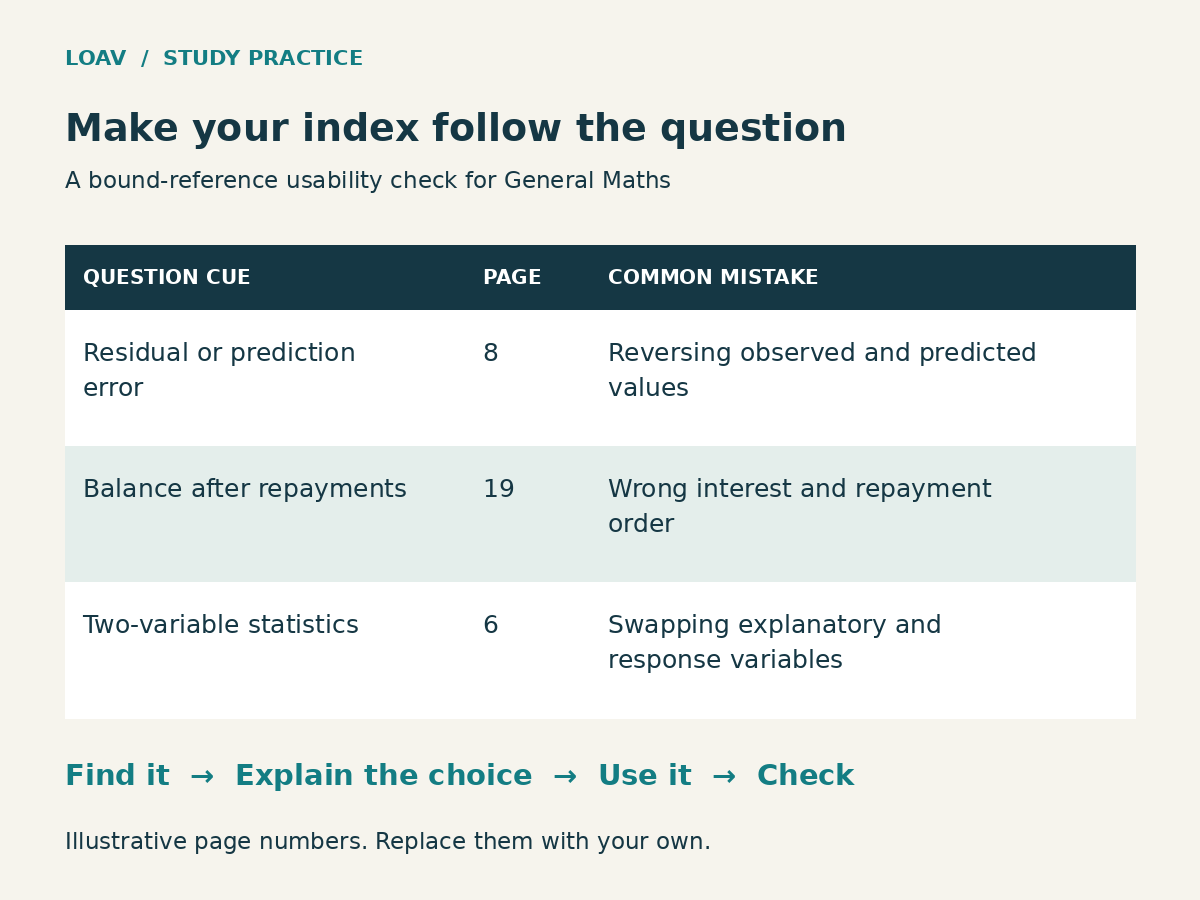
Keep warnings specific to mistakes you have actually made. One useful reminder beside the relevant method is easier to notice than a crowded page of general cautions.
Retest with changed wording
On your next practice session, choose a different question testing the same idea. Change the context or use a fresh paper, rather than repeating an answer you remember. Find the entry, explain your method in one sentence and complete the question. Then check the response against the relevant guide.
If the lookup now works, leave it alone. If it still fails, make one targeted repair and test again. Our VCE study-skills guide can help you fit this cycle into revision. For support with recurring difficulties, explore LOAV’s VCE tutoring or ask about a trial session. Bring your reference and the questions that exposed the problem.
